

So you’ve heard the hype, maybe watched a few games, attempted a paddle flip or two and now you’re wondering… how do you actually play pickleball? If you’re new to the game and keen to test your skills, keep reading as I attempt to break down the basics for you (from a fellow amateur pickleball gal).
Here’s your go-to guide to finally make it off the sidelines with confidence! And if you haven’t already, be sure to check out this article where I tell you all about the origin story of pickleball.
The basics of a pickleball game
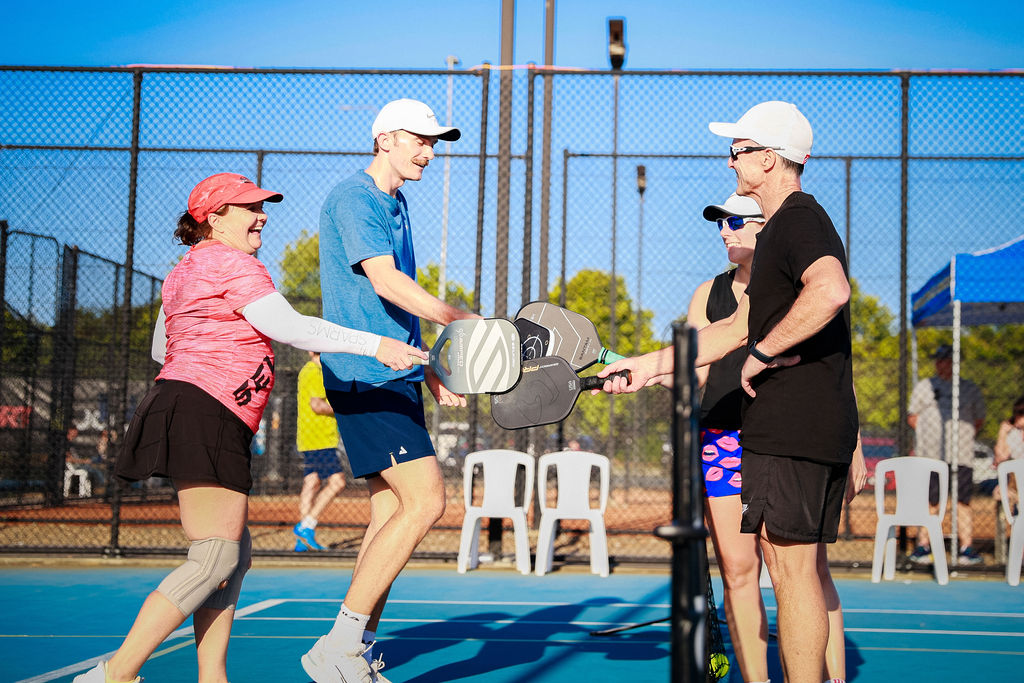
Similar to tennis, pickleball can be played as singles (1 v 1) or doubles (2 v 2), but most games at the beginner level are played as doubles. It’s fast-paced, super social, and fairly easy to pick up the basics (take it from someone with zero sports background).
In a traditional game, the goal is to be the first team to reach 11 points, winning by 2 (so if you’re tied at 10-10, one team must score 12 points to win).
You serve underhand, play on a small court, and most of the action happens up at the net. Once you get the hang of a few basic rules, you’re ready to go!
How to serve
There are a few rules to be aware of when it comes to serving:
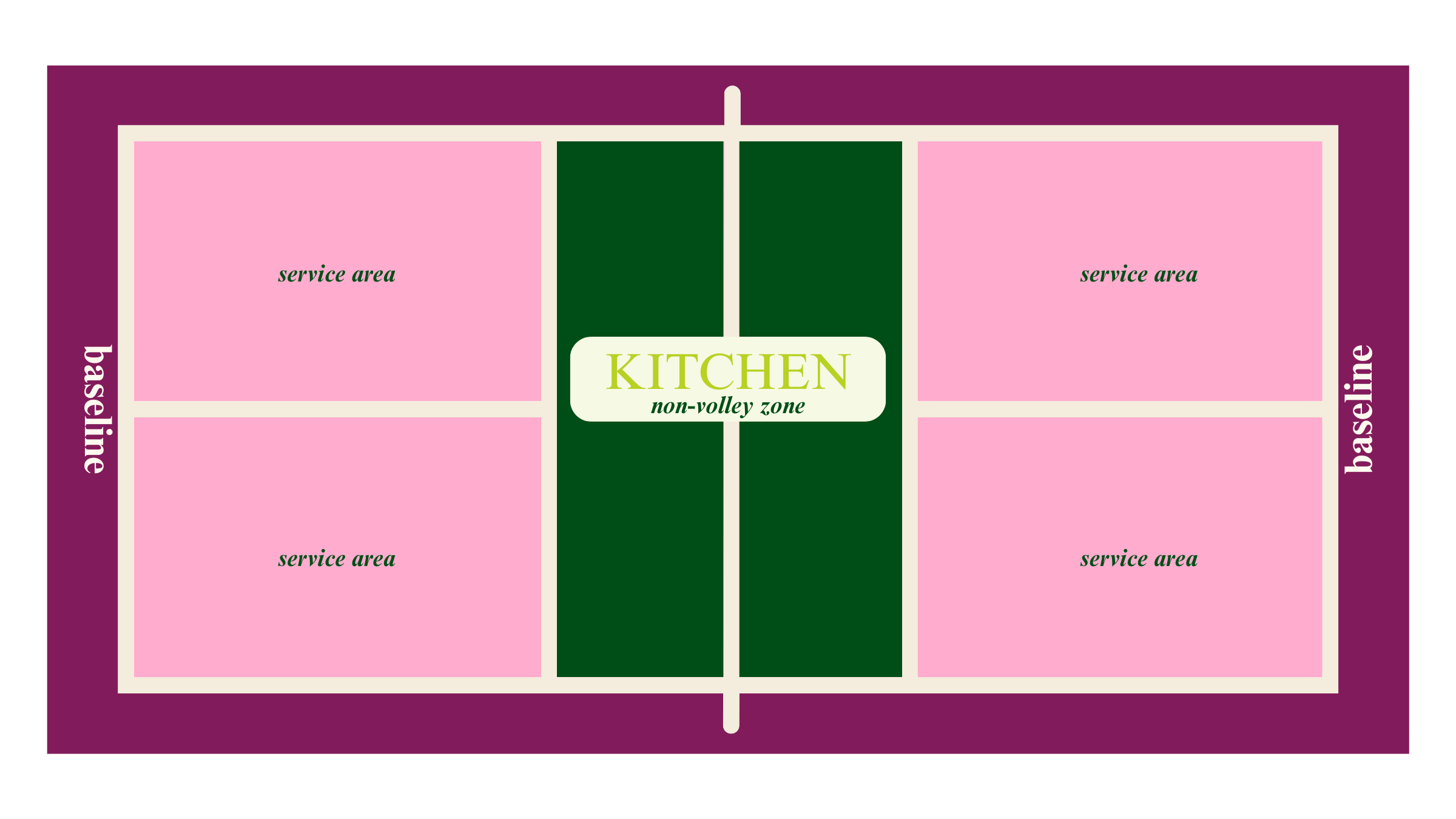
- Serves must be underhand and hit from below the waist
- The ball is served diagonally from behind the baseline
- The ball must clear the kitchen (the non-volley zone)
Unlike in tennis, in pickleball each player only gets one serve attempt – if it hits the net or lands out, it’s a fault. You do, however, play on if it’s a let. So if you serve the ball and it clips the net but lands diagonally beyond the kitchen, it’s play on.
If you’re playing doubles, each player gets a turn to serve before it switches to the other team. The player on the right always serves first, and players on the serving team switch sides after each successful point.
Here’s the only tricky bit: at the very start of a game, only one player serves before it switches sides. After that, both players on a team get a turn before the serve changes over.
How scoring works
In traditional pickleball scoring, only the serving team can score points. So if you’re not serving and win the rally, no one scores a point and it simply moves onto the next server.
As mentioned before, traditional games are played to 11 points, win by 2. Some tournaments play to 15 or 21, but 11 is standard for casual play.
The score is always called as three numbers: server score – receiver score – server number (1 or 2).
So if you’re serving and the score is 3-5-2, that means:
- Your team has 3 points
- The other team has 5 points
- The second server on your team is serving
It sounds a bit confusing at first, but easy enough to pick up after a few games!
The two-bounce rule
This is one of the golden rules that makes pickleball fun and fair!
After the ball is served:
- It must bounce once on the receiver’s side
- Then bounce again on the server’s side
- Only after that can you start volleying (hitting the ball out of the air without first having to let it bounce)

The infamous kitchen (non-volley zone)
You’ll hear a lot about the kitchen in pickleball. The kitchen refers to the 7-foot zone on either side of the net where you’re not allowed to hit the ball out of the air (volley).
Think of the kitchen as the great equaliser in pickleball… it stops tall players from smashing everything at the net and makes space for creative, slower, more thoughtful play.
So… what can you do?
- You CAN step into the kitchen if the ball bounces first
- You CAN even step in before the ball bounces if you know it’s going to land in the kitchen – just make sure not to volley it
- You CAN dink, drop, and play soft shots that land in the kitchen – all part of the strategy
- You CANNOT volley while standing in or touching the kitchen line
To get a little more technical, you also can’t land in the kitchen (or step on the line) after volleying a ball if your momentum leads you there.
What a point looks like
If you’ve never played before, it can help to picture a rally from start to finish:
- Serve: Player 1 serves underhand, cross-court
- Return: The receiving team lets it bounce and hits it back
- Bounce again: The serving team lets it bounce again before returning
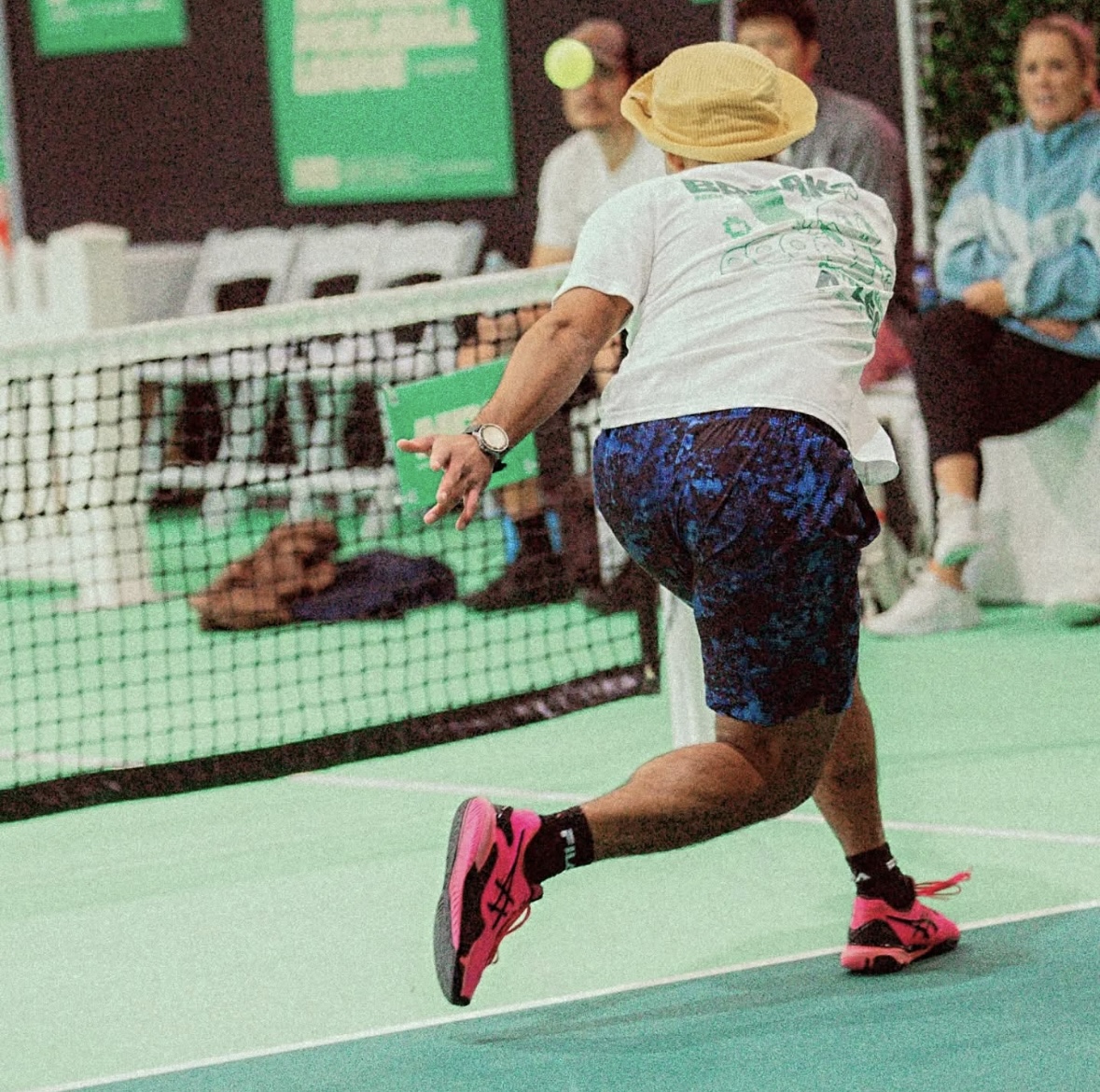
- Rally: Now volleys and groundstrokes are allowed! The point keeps going until someone hits into the net, out of bounds, or breaks a rule (like volleying from the kitchen).
If the receiving team faults, the serving team gets a point. If the serving team faults, no one scores a point and the next server is up
Why people fall in love with pickleball
There’s a reason pickleball is one of the fastest growing sports in the world. It’s been said time and time again, but it’s one of the most accessible sports out there. Regardless of age, fitness level, sporting background, or physical ability, anyone can grab a paddle and have a go.
Especially at the beginner level, it’s quick to pick up, easy on the body, super social while still being competitive and strategic, and it’s just so dang addicting. You don’t need years of practice to enjoy it – most people can learn the basics in a single session.
And because the court is small and rallies and games are typically short, there’s a lot of socialising between points! Definitely not surprising that the sport boomed during the pandemic.
As with any other sport, the further you progress in skill and inch closer to the pro scene, the more tactics and nuances come into play, but if you’re just getting started, it’s truly the perfect social hobby.
I’ve never met anyone who’s tried it and not loved it – honestly it only takes one game to get hooked!
Ready to give it a go?
If you’ve made it this far, you already know more than most first-timers. The best way to learn is to play, so grab a paddle, find your local court, and give it a shot. If you’re in Australia, check out my tiny resource guide for finding courts near you.
And stay tuned for the next Pickle Bits where I’ll tell you all about what you actually need to start playing.
xo,
Tati


