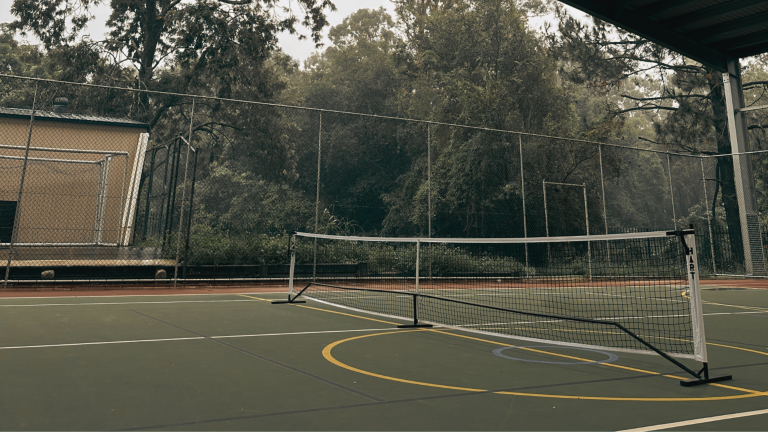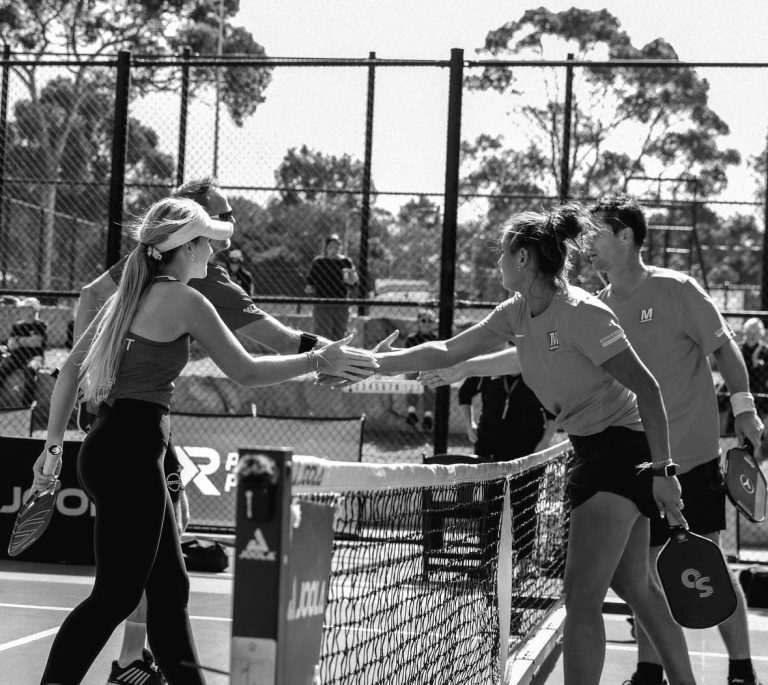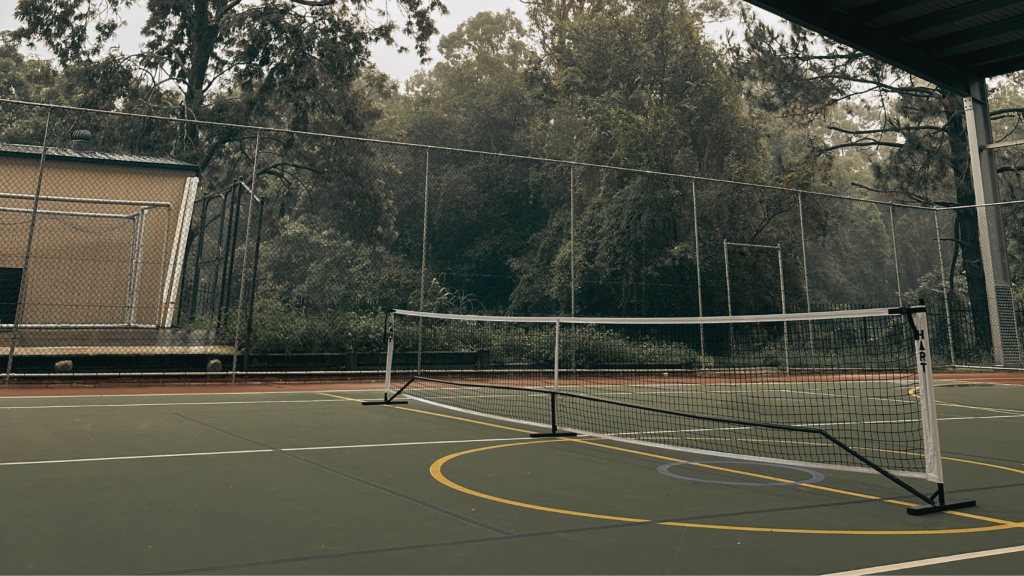

There is no doubt that pickleball has taken the world by storm. Courts are popping up in cities all across the world, and people just can’t get enough! I’m sure, in large part, pickleball’s historic rise can be attributed to a low barrier to entry, mostly characterised by its inclusivity and how quickly anyone can learn the basics, jump into a game, and start having fun.
Even so, there’s one part of the game that tends to be confusing for newbies. If you’ve heard of pickleball, chances are you’ve heard of ‘the kitchen’.
Knowing how to leverage the kitchen, better described as the non-volley zone, can be a powerful asset for beating your opponents in the soft game. That said, if you’re caught standing in it at the wrong time, you may be in a bit of trouble.
In this post, we’re breaking down everything you need to know about the kitchen. You’ll learn where the kitchen is, what you can’t do there, and how to actually use it to your advantage.
What is the kitchen?
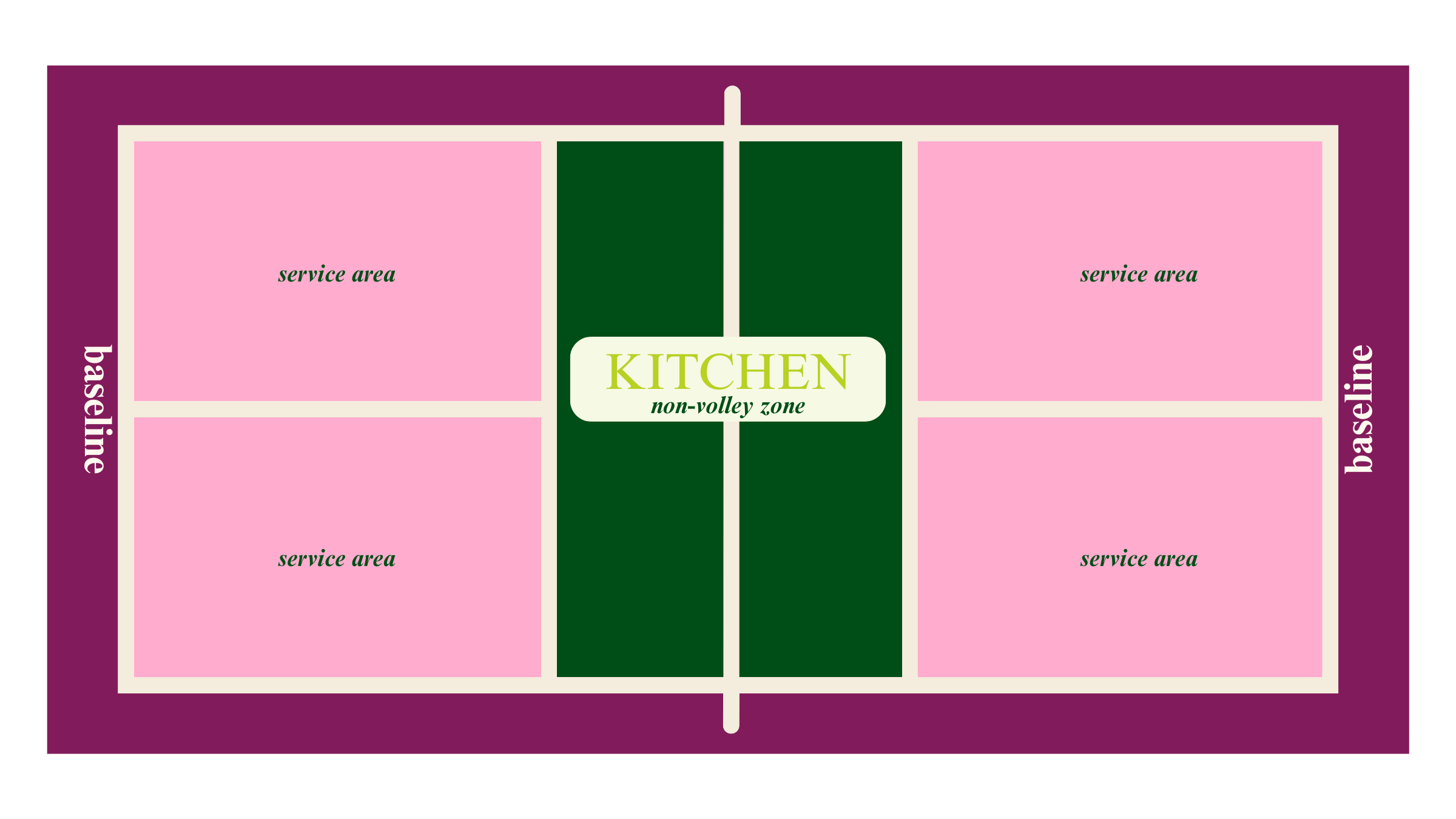
On a pickleball court, the kitchen refers to a 7-foot section on each side of the net known as the “non-volley zone.” As suggested, players are not permitted to volley — in other words, hit the ball out of the air — while standing in it. The kitchen rule exists to prevent players from standing at the net and smashing every shot.
You’re considered “in the kitchen” when you step on or over that line. It spans the entire width of the court and applies to both singles and doubles play.
Some of the most intense (and exciting) pickleball rallies happen in and around the kitchen line. It’s an integral part of the game, and mastering play in this zone requires both precision and quick reactions.
Off limits in the kitchen
The basic rule is: You can stand in it, walk through it, or even sit in it for the duration of the match, you just can’t volley the ball from the kitchen.
If you hit a volley and any part of you (including clothing and accessories) or your paddle lands on the line or in the kitchen, this is considered a fault. Say you hit a shot and stay fully out of the kitchen, but a piece of your paddle’s edge tape, your hat, or your sunglasses fall into the kitchen from the momentum of your shot… that’s a fault.
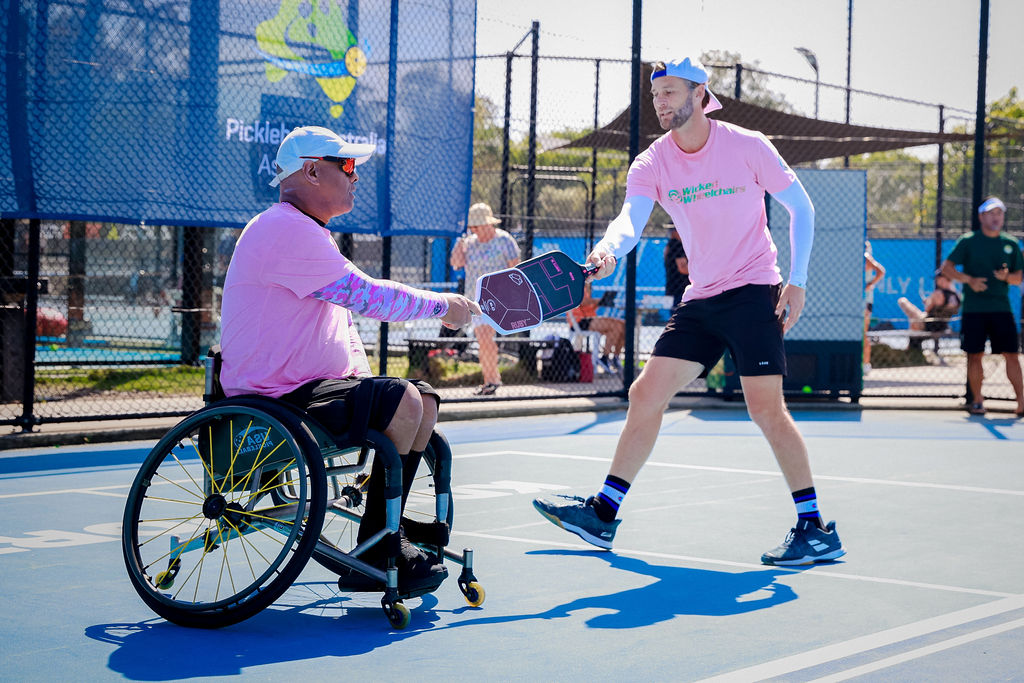
Wheelchair pickleball rules allow a player to volley the ball with their front wheels on or inside the kitchen line. A fault occurs if a ball is volleyed and the rear wheels touch the line.
Even if you’re technically outside the kitchen when you make contact with the ball, if your momentum carries you into the kitchen after the shot, this is still considered a fault.
That said, the kitchen rule only applies to the physical surface of that zone. This means as long as no part of your body (or clothing, etc) is touching the kitchen, you can still reach over it to volley a ball.

Kitchen takeaway #1
If the ball hasn’t bounced yet, stay out of the kitchen.
When can you enter the kitchen?
You’re allowed to hit a ball while standing in the kitchen only after it bounces; for example, to return a dink or a short drop shot. Once the rally ends or the ball is dead, you can move in and out of the kitchen freely.
You can even stand directly beside the kitchen, off the court, and volley a shot from there (known as an erne).
Essentially, there’s no rule against being in the kitchen. The rule is only against volleying from within it. It’s a no-volley zone, not a “no-go” zone.
For anyone interested, you can read all the specific rules via the 2025 official USA pickleball rulebook.
Why the kitchen is integral to the game
The kitchen is central to the soft game, which is a key part of higher-level play (particularly in doubles) and what distinguishes pickleball from tennis. It’s typically the best positioning for both volleying and reaching soft shots, allowing you and your team to gain control of the rally. When rallies slow down at the net and players start dinking (gentle, low shots just over the net), the kitchen becomes a strategic battleground.
Being close to the net lets you react quickly, control the pace, construct your shots, and strategically decide when to speed up a ball. And because you can’t volley from there, players need precise footwork, patience, and good timing to master this part of the game.
Kitchen takeaway #2
The kitchen tends to reward finesse over force. It’s slower, strategic, and can really be a test of patience for players. Oftentimes, players get impatient and are keen to speed up the ball when it isn’t advantageous. The more patient you are at the kitchen waiting for the right time to attack, the more advantage you have over your opponent.
Beginner mistakes to avoid
If you’re new to pickleball, here are some common beginner mistakes to avoid in the kitchen.
- Having your toe on the line while volleying. This still counts as a kitchen fault.
- Falling into the kitchen to hit a volley. Your momentum can carry you in if you reach too far for the ball.
- Stepping in to jump for an overhead smash. If you turn sideways before hitting an overhead smash like in tennis, your front foot may push off from inside the kitchen.
- Avoiding the kitchen altogether. The sooner you can learn to dominate the kitchen, the sooner you’ll level up your game. Don’t be afraid of it, just learn how to leverage it.
Kitchen takeaway #3
Stay aware of where your feet and paddle are during every point.
TIPS FROM A PRO
If you’re really looking to level up your game, here are 3 tips from one of Australia’s top players for dominating the kitchen.
- Get up to the kitchen as quickly as possible after your serve.
- Once the return has bounced, you want to close the gap to the net. Hanging back gives your opponents more control in the soft game, while being up at the line puts you in a better position to respond to dinks and volleys. Quick but controlled movement is also key here. Don’t rush so fast that you get caught mid-step.
- Get comfortable blocking the ball from the kitchen line.
- Instead of swinging wildly at fast shots, practise just holding your paddle steady to absorb the pace. A good block keeps you in the rally and gives you time to reset your position. Envision being a defensive wall — your paddle is there to redirect, not overpower.
- Learn how to dink in every direction.
- Crosscourt and straight-ahead dinks all have a place in your kitchen game. The more variety you have, the harder it is for opponents to anticipate your shots. Practice controlling depth and angle so you can open up space and move your opponent out of position.
FINAL THOUGHTS
The kitchen might feel like a tricky rule at first, but once you get the hang of it, it becomes second nature and, for many players, one of the most fun parts of the game.
Next time you’re on court, practice a few dinks and pay attention to your footwork. Also, if you get an opportunity, have a close look at how the pros navigate the kitchen. Keep an eye out for how top-level players construct their points, sit in a dinking rally, and then decide when to pull the trigger on a speed-up. It’s pretty impressive.
If you’re a seasoned player, drop some of your own tips down below for those just getting started!
Catch you in the next Pickle Bits,
Tati