
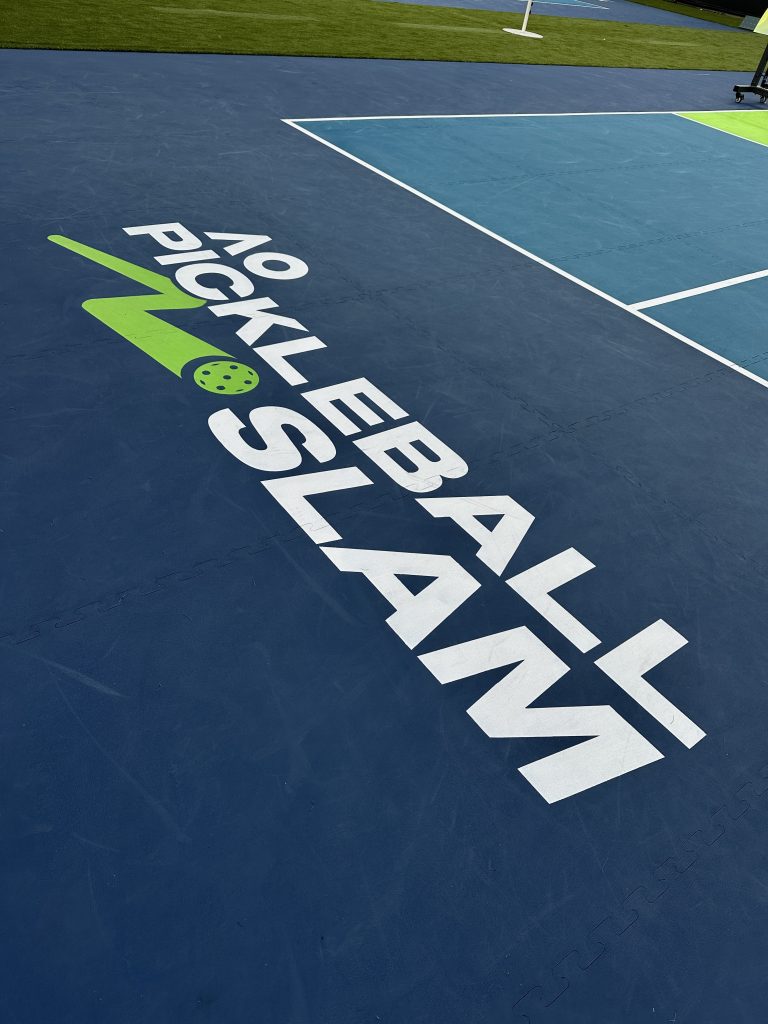

The Australian Open made history in 2025 by hosting its first professional pickleball tournament alongside the tennis Grand Slam. Played on Court 3 at Melbourne Park, the AO Pickleball Slam showcased 24 players competing in an innovative time-based format, marking a significant milestone for pickleball in Australia. This insider’s account from professional player Joey Wild details the tournament’s groundbreaking format, world-class facilities, and implications for the sport’s future. With livestreams reaching over 20,000 viewers and unprecedented integration with Tennis Australia, this event sets a new benchmark for professional pickleball in Australia. From technical court analysis to production quality insights, discover how the ‘happy slam’ is pioneering the coexistence of tennis and pickleball at the highest level of professional sports.
Jannik copied my look, then copied me winning the AO. (Nothing too spicy in this, my [Joey’s] first blog entry, just some takeaways from the first event of the year).
The big picture: Tennis x pickleball integration
Pickleball at a Grand Slam? The AO is known as the “happy slam” and the most innovative of the majors, so it makes sense they’d be the first to embrace pickleball. That being said, I wouldn’t have expected such a warm embrace. We went in for a cold handshake and instead got a dap up into hug combo. Is this a sign of things to come for pickleball in 2025?
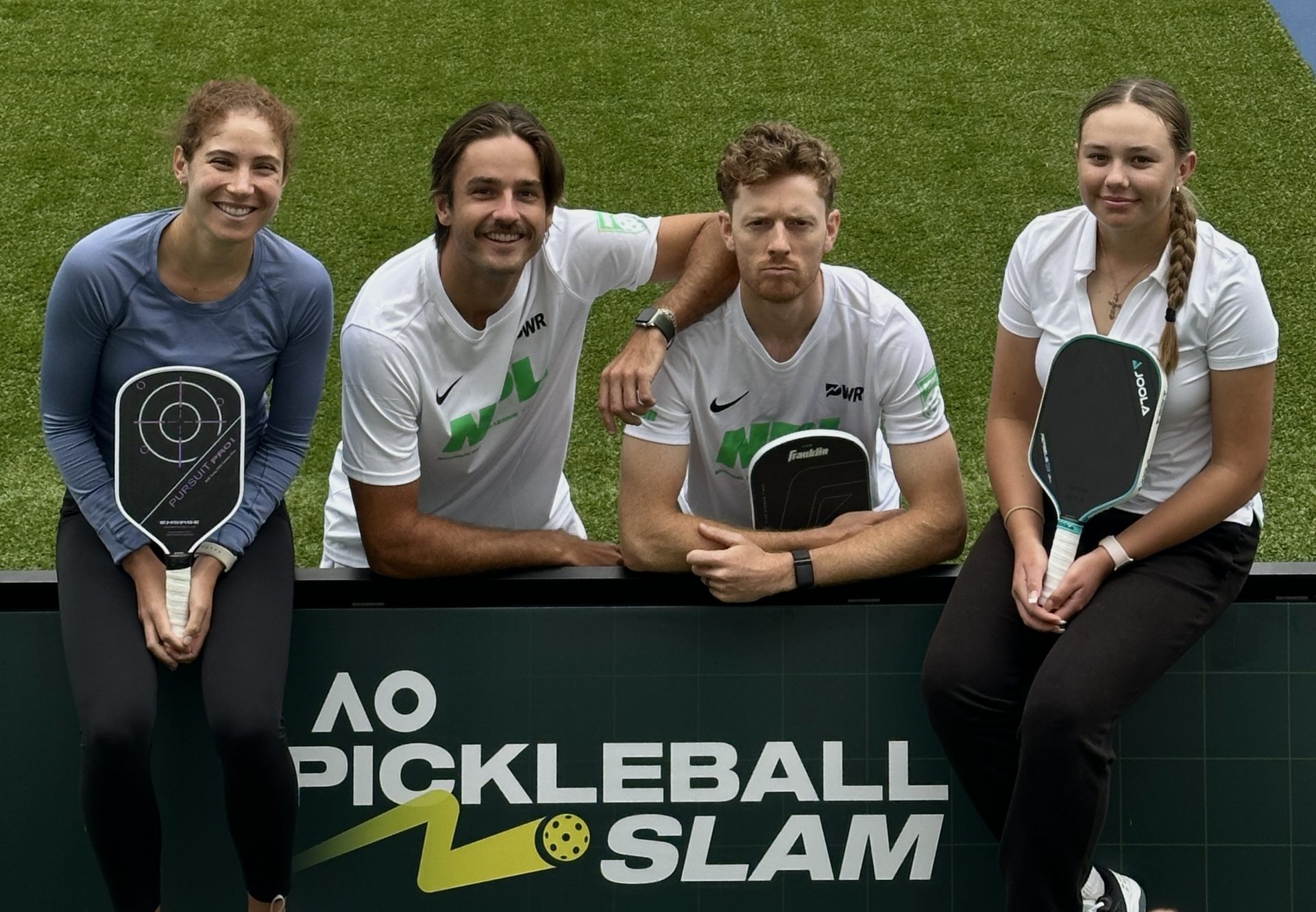
Pickleball Australia do so much good work and are leading the sport in the right direction (PAA, if you’re reading this, please get us public courts with permanent nets in every major city… I’m sure it’s not too much to ask). That being said, if Tennis Australia were to genuinely jump on the pickleball train, pushing it forward not keeping it in the tennis shadows, the sport could be set for a huge boom.
Having our sport showcased alongside the world’s best tennis players this weekend gave it a legitimacy that’s hard to replicate. The timing and location were both prime — running the event during the AO finals weekend and on Court 3 right near Garden Square meant we had constant foot traffic from people moving between the matches. We weren’t hidden off to the side. We were right in the middle of the action.
Playing pickle @ Melbourne Park just hits different. There’s something special about competing in a venue of such a high calibre. The facilities are world-class and everything just feels… professional. It was unreal getting the full Grand Slam treatment — access to player areas, a daily stipend for meals and sick AO player merch. It will be tough for other tournaments on the calendar this year to match that level.
Technical breakdown: What worked (and what didn’t)
The format? Didn’t love it, didn’t hate it, would play again.
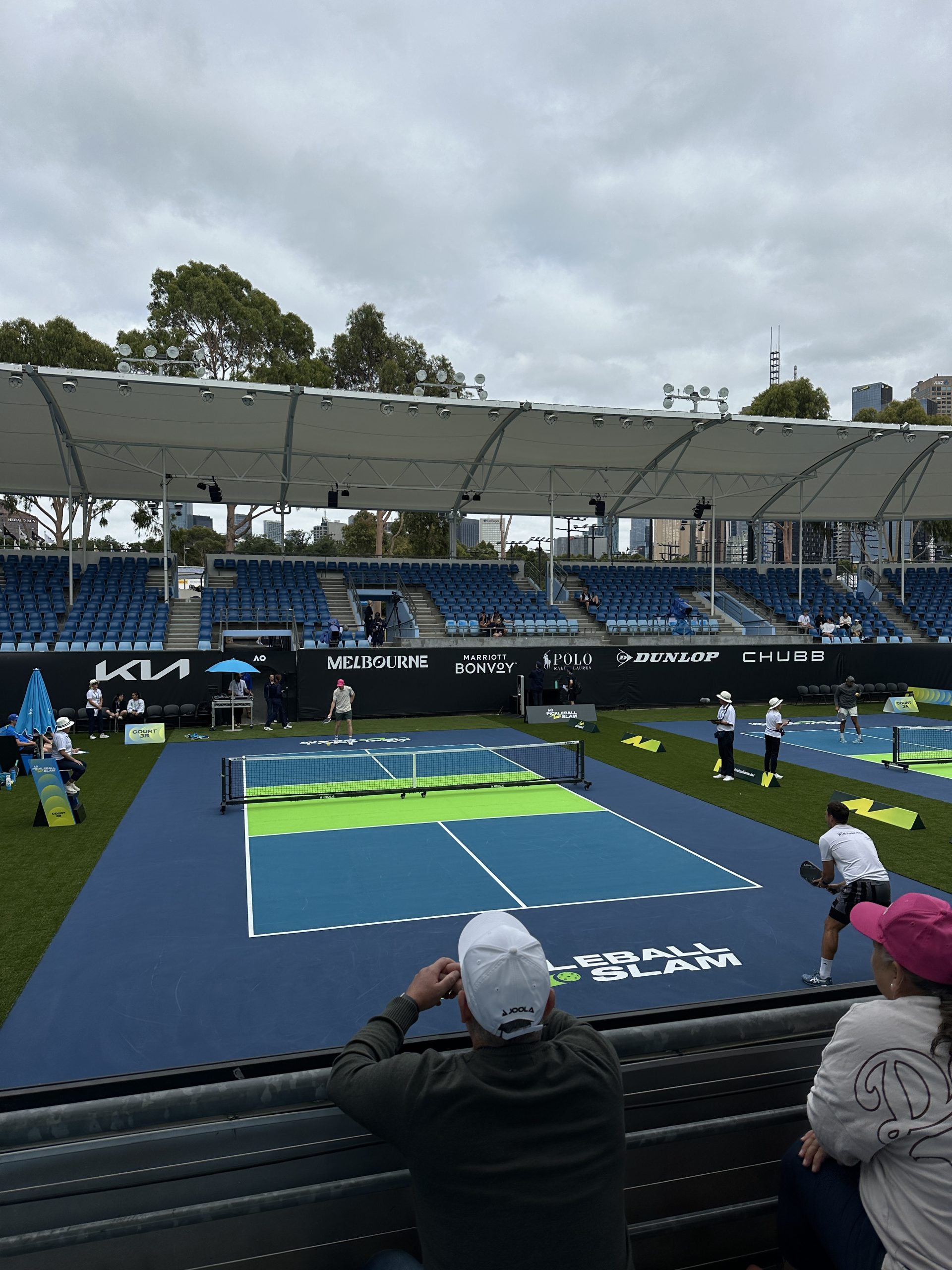
This was the first instance I’ve ever played in a time-based pickleball format. 10 minutes was allotted per singles game and 20 minutes per doubles. An entire match fit nicely into a three hour window, or 90 minutes when spread across two courts.
The clear upside to this was timing of matches: knowing when you’re going to play next means you can plan so much better for the day — warm up times, eating, resting, etc. Compared to a regular tournament where you’ll come off court with no clue if you’ll be sitting for 10 minutes or 2 hours until the next match, this was a breath of fresh air.
The major downside was the rampant time wasting throughout the event (until the final day when players no longer had to retrieve their own balls). It made sense, and every team did it — grab an early lead, then try and run the clock down.
Players suddenly needed five extra bounces before every serve and became unable to hit a ball over the net back to their opponent after each point. More shoelaces came untied during matches on Court 3 this weekend than anywhere else on the planet.
The tournament made a solid improvement on day 3 with refs having a bucket of balls ready for use on each serve to stop a lot of the shenanigans. Further potential improvements I can think of to this format would be to include some sort of extra time to account for any delays during the match, similar to soccer (limited to a minute to not affect the overall scheduling), or having an obvious serve clock with time warnings/violations for players.
These would both require more detailed time keeping on each court.
Then again, if you do have an equipment issue or you need to dry your hands off with a towel, there shouldn’t be a punishment just because the other team wants to rush through points in an attempt to catch up. There’s some sort of balance here.
Venue & atmosphere: Melbourne park brings the heat
The atmosphere was absolutely electric and it was incredible playing in front of the biggest crowd I’ve experienced in pickleball. I’m sure that was the experience for most other players there as well. The pickleball and tennis community really showed up, especially for that final, getting amongst the action and bringing great energy. Having a DJ and emcee there all day every day kept the dead time entertaining, and it felt like a proper live sports event.
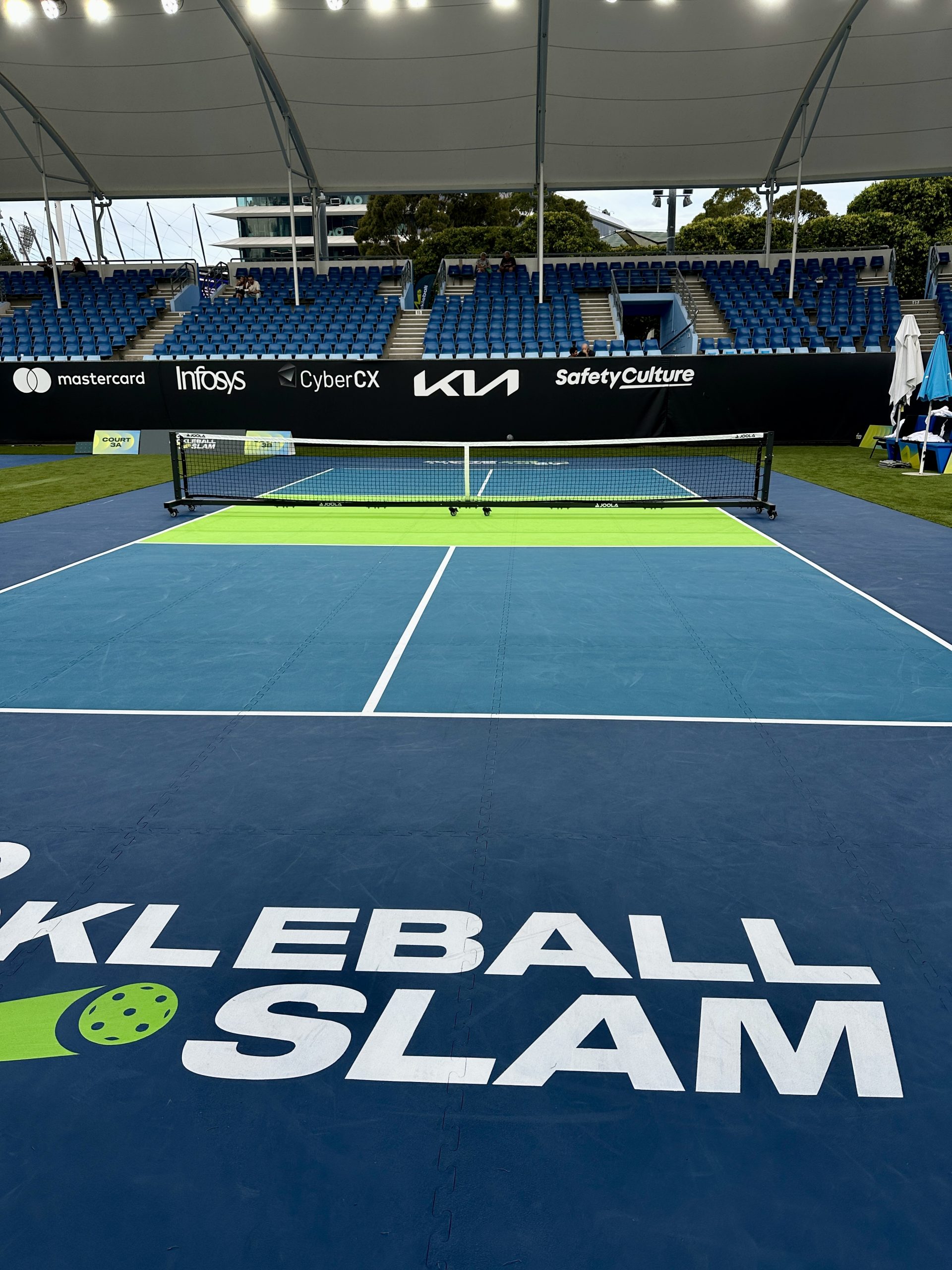
The court setup was solid — properly professional with plenty of space to the sides and back of the courts. We had benches, umbrellas, ref chairs… even the synthetic grass added to the visual appeal. There was no question we were playing at the Australian Open.
The court surface played… meh. Similar to a pickle roll in terms of occasional dead spots and bad bounces. I did hear that the surface underneath wasn’t perfect and there may have been dew on the ground when laying the courts, but all in all, for a court that was completely transformed in seven hours overnight, it was impressive.
That said, the choice of kitchen colour was criminal. Who signed off on that? It looked nice from the sidelines but was impossible to track the ball on dinks and speed-ups below the net. That’s an easy improvement for next time.

Production quality
The AO live-streamed all of the action from both pickleball courts on their YouTube channel throughout the weekend. They used a single fixed camera on each court that was positioned perfectly imo (baseline view is best with one camera) and, as mentioned earlier, the courts looked great. There was no commentary, which I think was a miss given the level of talent on display.
Despite that, some of the live streams grabbed 20k+ total views, compared to the Australian tournaments maxing out at 1-2k total last year. That’s a huge increase for eyeballs on the sport in this country, and a platform that hopefully will be there again next year and done even better.
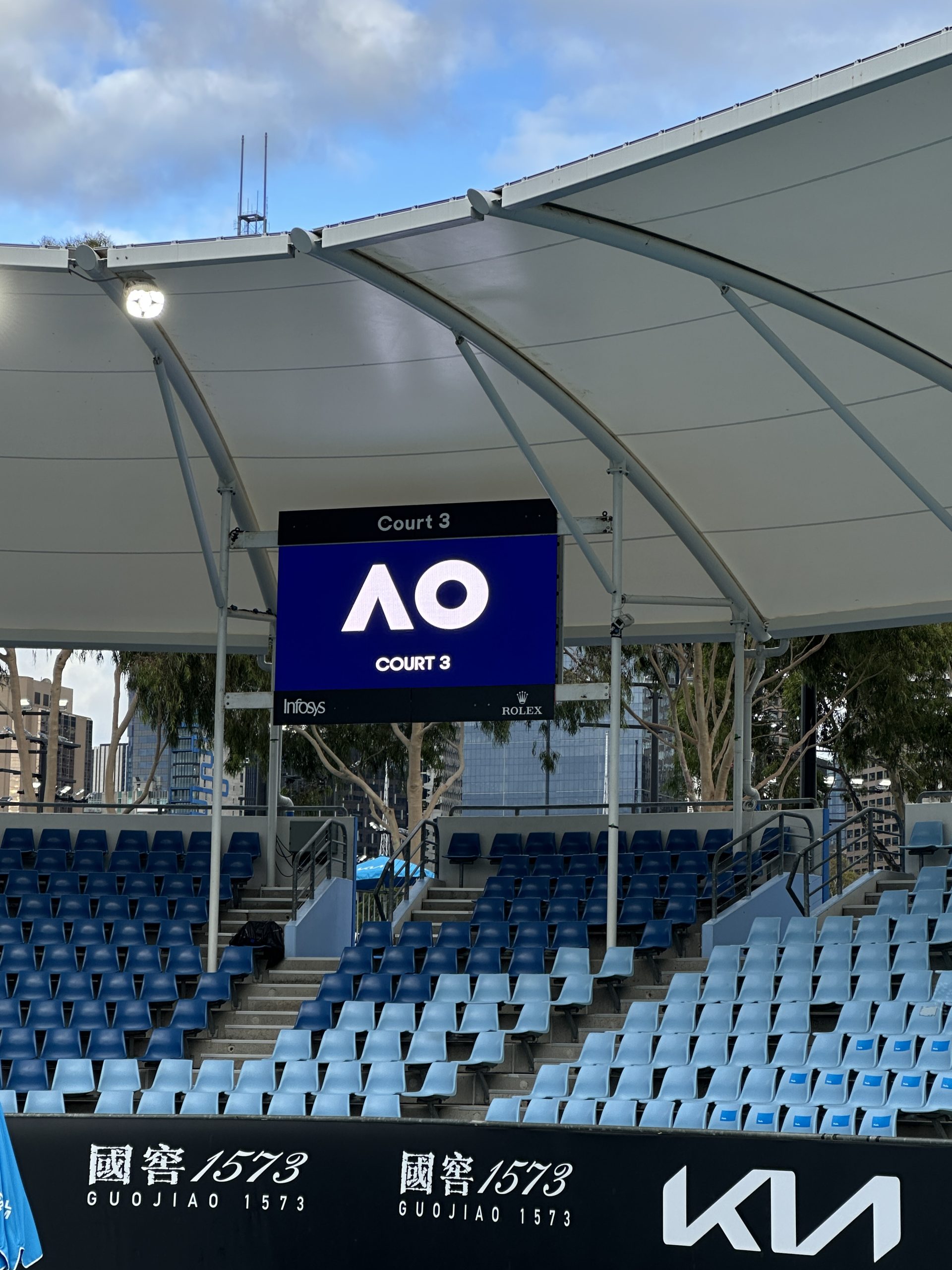
The social media presence could use some work. Leading into the event, I don’t think I saw anything published publicly about the event, format, where to watch in person/online, etc. A lot of the spectators I met stumbled upon it at Court 3 and didn’t see the event listed on the official schedule.
As the tournament rolled on, the AO team captured some content and started publishing to social media. As expected, the community of tennis purists were in uproar of the AO posting any sort of pickleball content.
I still don’t understand why there’s hate for other people having fun in a sport that, at this point, is so obviously not mini-tennis. Womp womp. Sorry that there are more recreational pickleball players than tennis players in the US these days I guess?
The future of tennis and pickleball integration in Australia
The success of this event at the AO raises interesting questions about other major tennis tournaments following suit. This will depend on the relationships between the tennis and pickleball governing bodies within each country… Most players would have expected a pickleball event at the US Open to have happened by now, however, the relationship between USTA (US Tennis Assoc.) and USAP (USA Pickleball) isn’t exactly cordial. Hopefully this divide doesn’t occur in Australia.
There was solid representation from the PAA team at the event, which leaves me feeling hopeful for a blossoming relationship between the big dogs of tennis and pickleball within Australia.
We can all holds hands and get the sport to the olympics, surely?
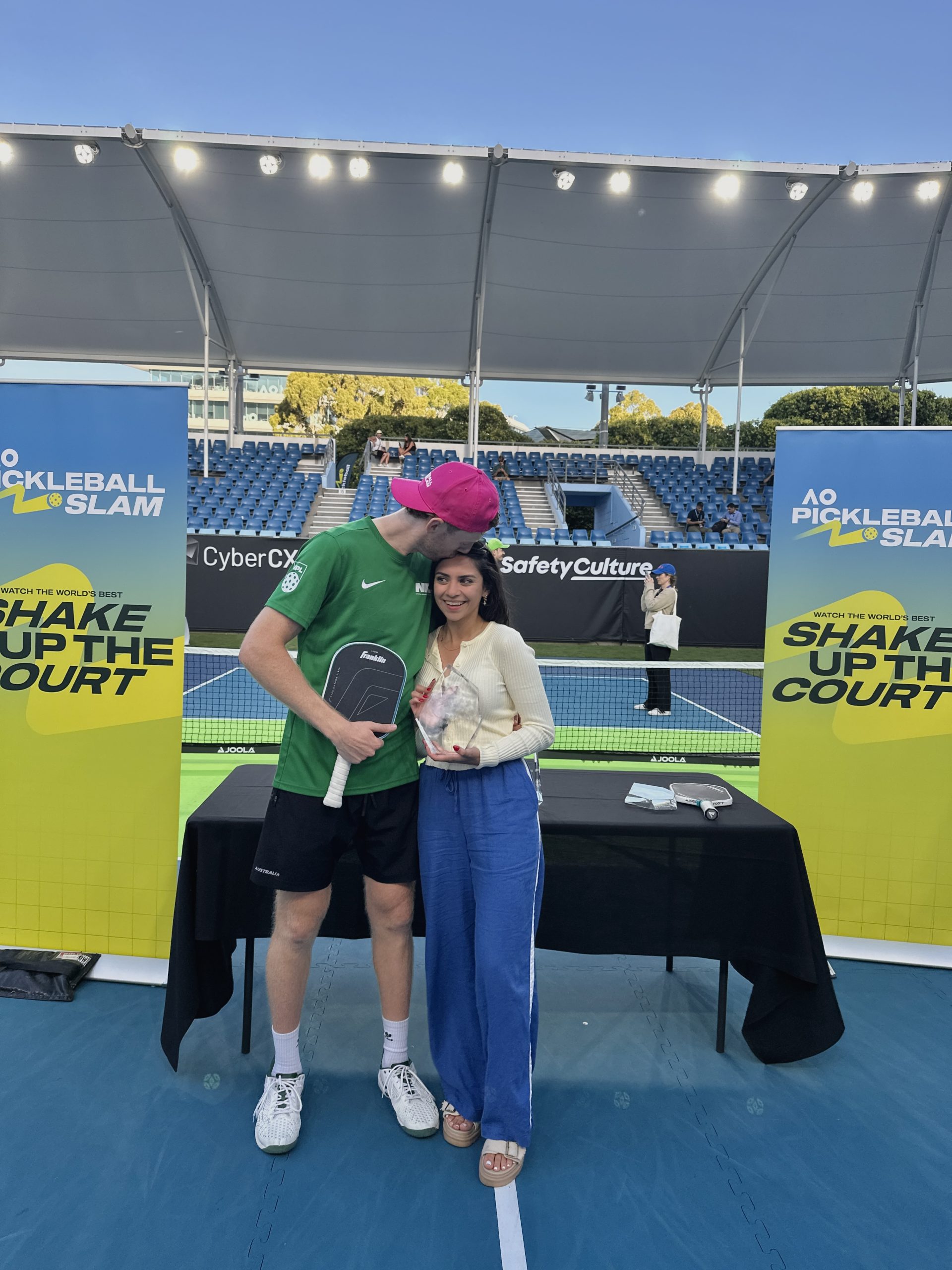
For Australian pickleball, this event was massive. The exposure, the professional setup and the integration with one of tennis’ grand slams sets a new benchmark for what’s possible. It shows there’s serious appetite for high-level pickleball events in Australia, and hopefully opens doors for more opportunities for local players to compete at this level.
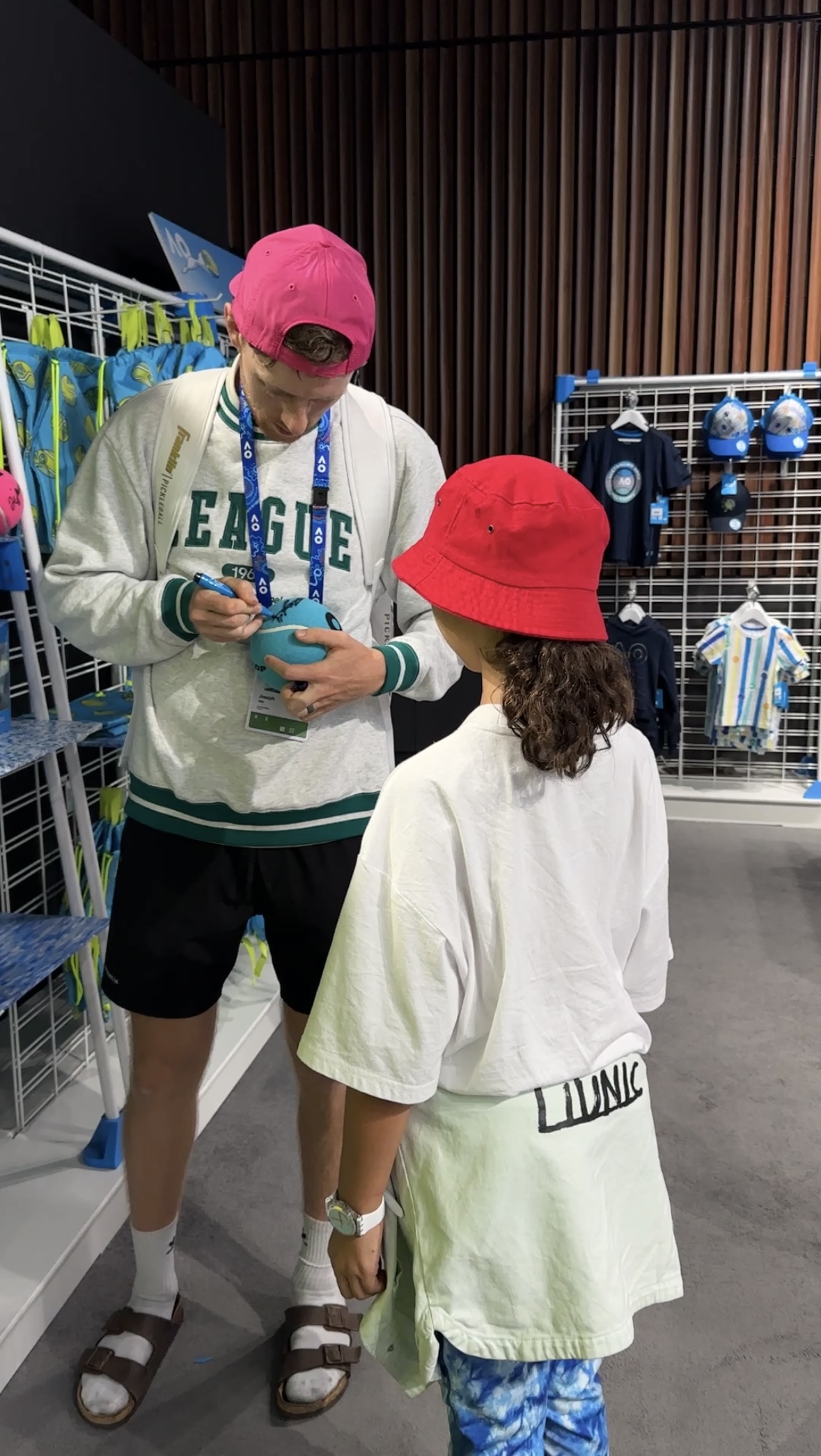
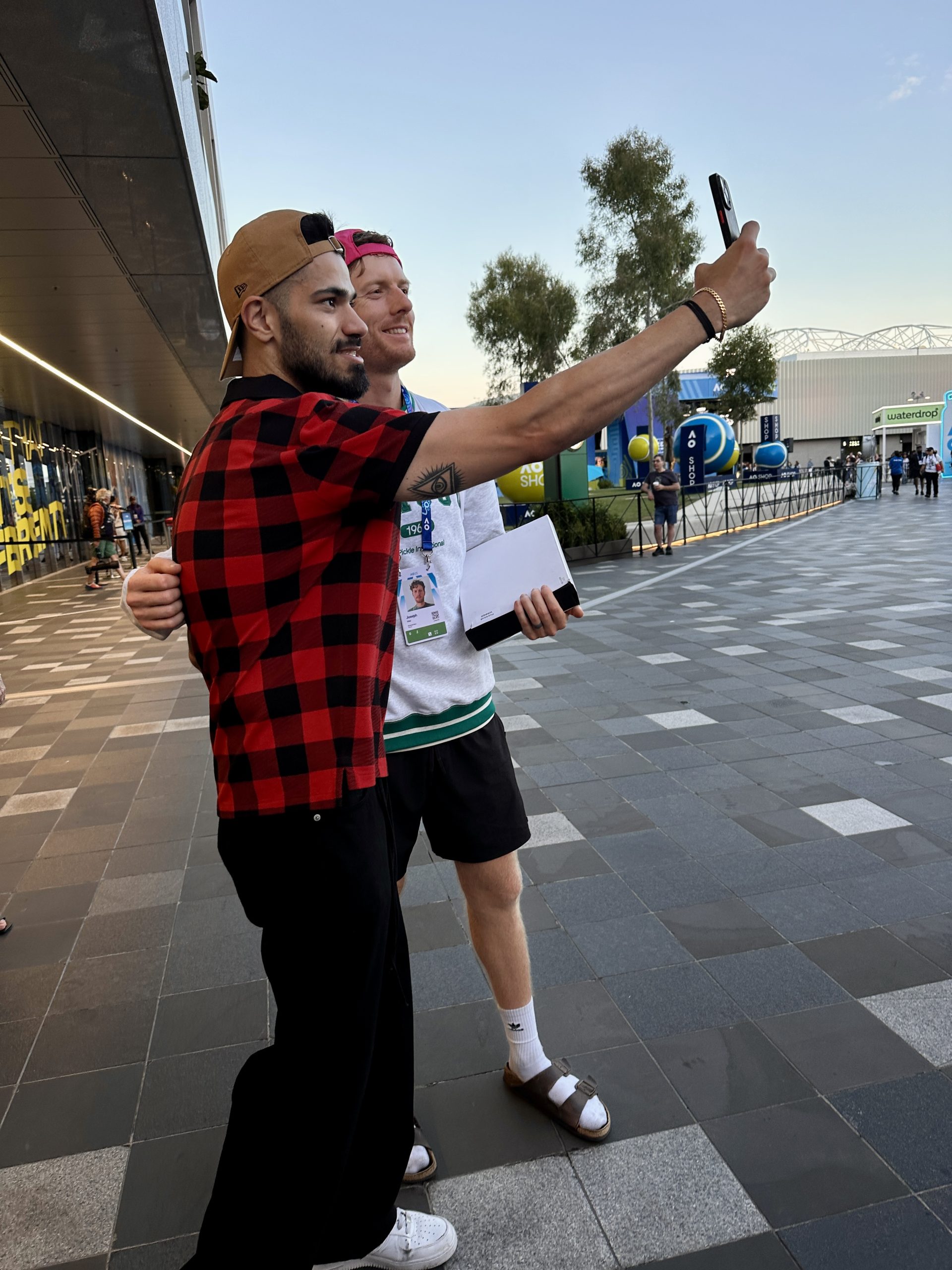
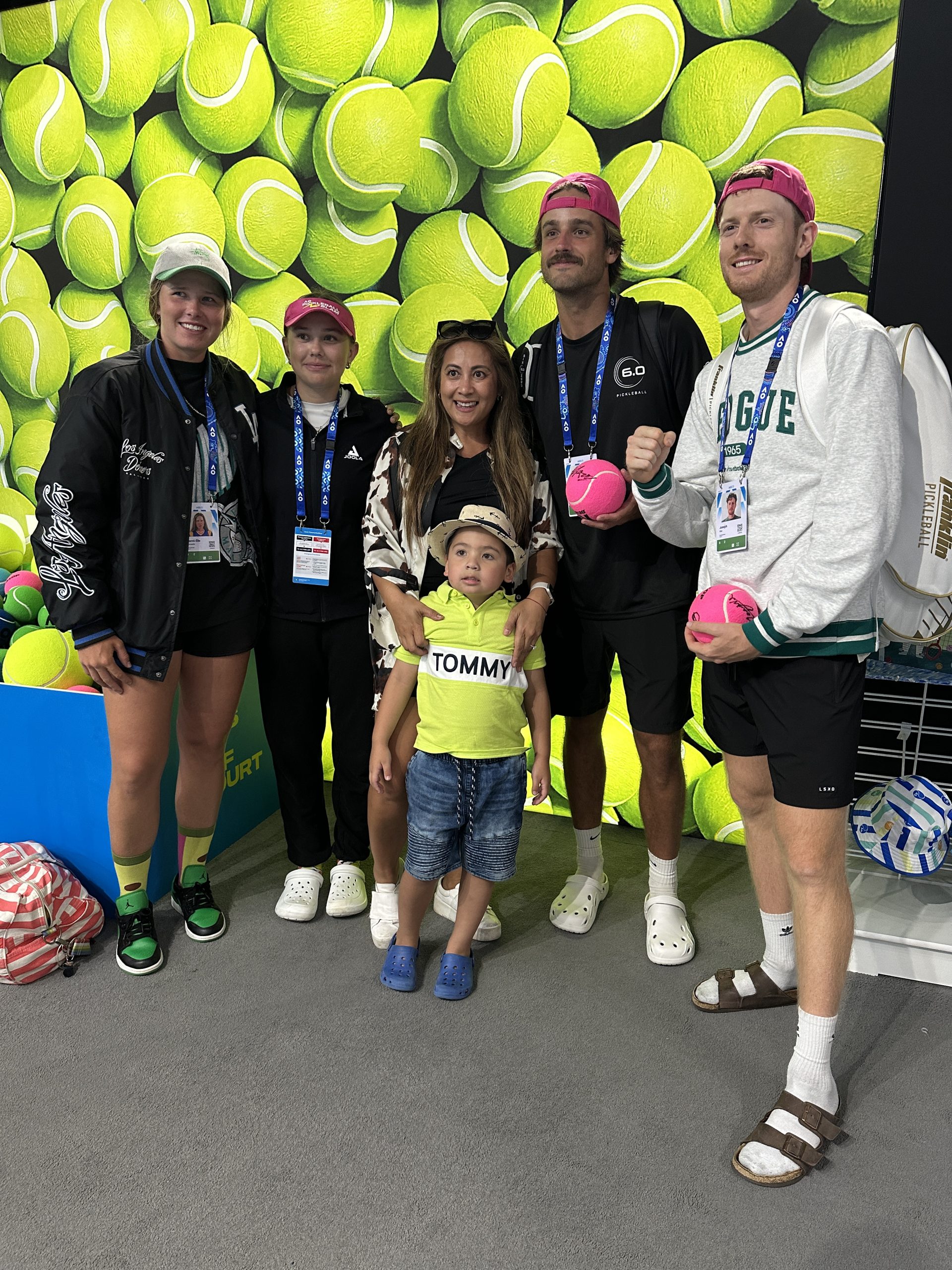
18 out of 24 players at the event were Aussies who got to experience what it’s like to be a professional athlete. We had people in the crowd (beyond family/friends for once) cheering us on, asking for autographs (bonus points if you signed someone’s forehead), and learning our names. That’s awesome.
Will be tough to beat this vibe at any other event in 2025, and I seriously can’t wait for the next AO Pickleball Slam.
What’s next up this week?
The PPA (US) Australia Open is next to plate. How will the Aussie players fare against some of the biggest names in pickle? Will the well-oiled machine that is the PPA Tour leave a lasting impact on how future tournaments are run within Australia?
We’ll find out soon…
Cheers
Want more from the Wham Bam Pickleball Slam? Check out these related posts:
The Australian Open makes history with first-ever Pickleball Slam | $104k prize pool
Get the full scoop preview this historic tournament.
The Australian Open Pickleball Slam… Tati’s take
Tati’s perspective on what it was like watching Joey compete all weekend, and the nail-biting last few points.
Well written Joey!